

As urbanisation continues to place increasing pressure on natural areas within and around our cities, landscaped spaces play a critical role in supporting local biodiversity. Conventional landscapes dominated by large lawns often require intensive maintenance while offering relatively limited ecological value.
Across Faircape’s portfolio of retirement villages, Landscape Architect Michael Wood is reshaping overlooked green spaces into thriving natural ecosystems through thoughtful indigenous planting and habitat-focused design.
Revitalising Heritage Manor’s grounds
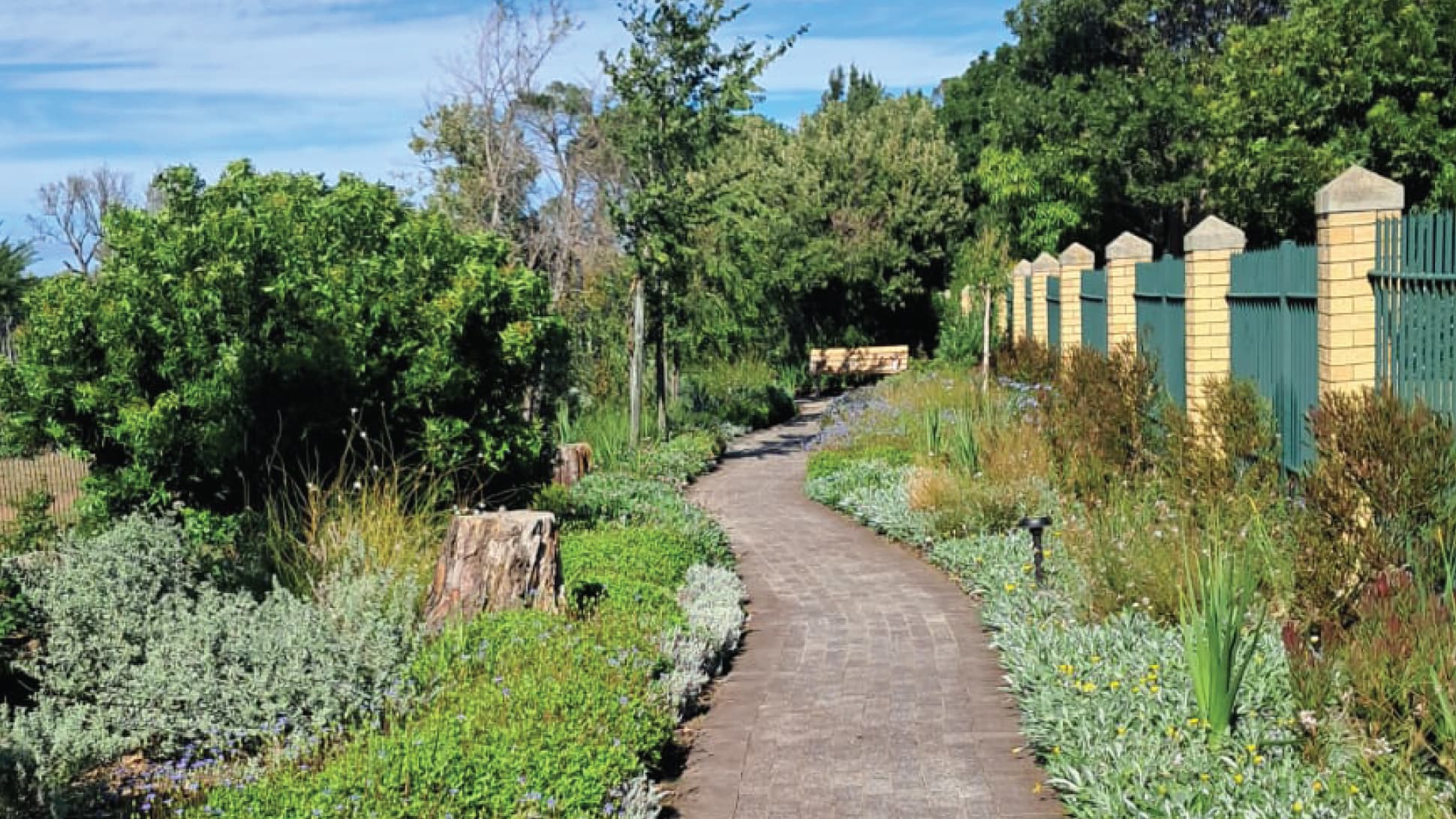
In 2025, he joined forces with the Faircape Landscape Team to convert an unused section of Heritage Manor into a vibrant walking trail. The result gives residents a peaceful spot to unwind while providing local wildlife with a crucial sanctuary.
Key features of the trail include:
- Seamless village connection: Establishes a convenient pedestrian link connecting the northern and southern areas of the village.
- Restorative pause points: Integrates comfortable seating benches, birdbaths, and bird feeders throughout the path.
- Direct access to nature: Encourages residents to slow down, engage with their surroundings, and experience local wildlife firsthand.
Indigenous fynbos & Cape flora planting strategy
The landscape design prioritises indigenous Cape flora and native fynbos species, carefully selected for visual appeal, seasonal interest, and ecological value:
- Pollinator & bird support: Flowering plant species supply crucial food sources for pollinating insects and nectar-feeding birds.
- Habitat creation: Diverse vegetation layers encourage a wider array of local wildlife to utilise and inhabit the landscape.
Redefining residential landscapes for urban biodiversity
The project demonstrates how retirement village landscapes can evolve beyond purely ornamental gardens into functional ecological environments that benefit both people and nature. By integrating urban biodiversity, everyday recreation, and thoughtful landscape design, the Heritage Manor walking trail shows how developed residential settings can actively contribute to restoring local ecosystems.