

By Michael Wood, Landscape Architect at Faircape Life Tokai Estate
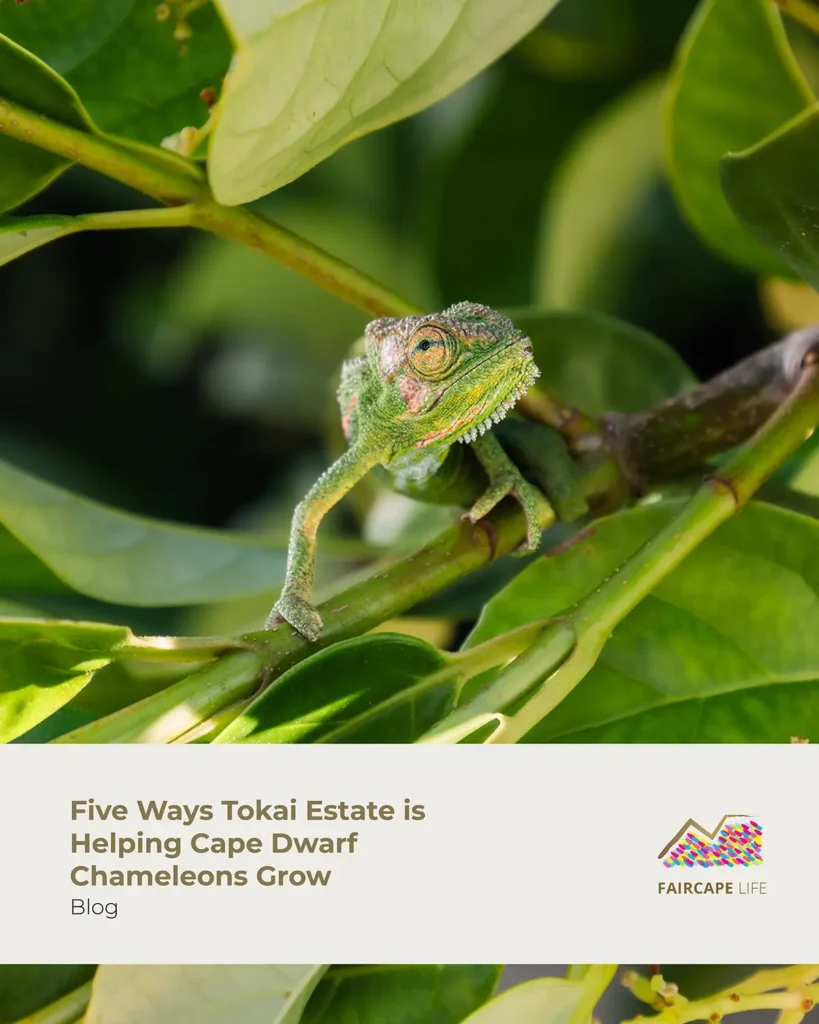
Urban living and wildlife conservation don’t have to be at odds. At Faircape Life Tokai Estate, a spectacular success story is unfolding right under our noses. Cape Dwarf Chameleons are breeding and growing in a carefully designed residential environment.
These tiny, tree-dwelling reptiles may be small, but they’re picky about where they live. For Cape Dwarf Chameleons, successful breeding depends on a delicate balance of habitat, food, and environmental care, and Faircape Life Tokai Estate is getting it just right.
Layered Habitats that Feel Like Home
Cape Dwarf Chameleons are arboreal, meaning they spend most of their lives in trees and shrubs, only venturing to the ground to lay eggs. To survive and reproduce, they need dense, layered vegetation that provides security, climbing opportunities, hiding spots, and hunting grounds.
The landscaping at Faircape Life Tokai Estate does more than beautify the neighbourhood. It creates a living ecosystem, with indigenous fynbos species planted throughout to provide suitable leaf surfaces for drinking water and to attract pollinating insects, which are a key food source for the chameleons. By layering trees, shrubs, and ground covers, Faircape Life Tokai Estate provides exactly the kind of environment these reptiles need to survive.
Leaf Litter is Nature’s Nursery
While leaf litter is often seen as messy and removed in many urban areas, at Faircape Life Tokai Estate it’s cherished. For chameleons, leaf litter is crucial, as female chameleons lay their eggs in the soil beneath it, and the decaying leaves provide the right humidity and moisture to help eggs hatch successfully.
The benefits don’t stop there though. Leaf litter also feeds insects, enriches the soil, and supports plant health, creating a natural cycle that sustains the entire ecosystem.
A Pesticide-Free Approach
Many urban developments rely on pesticides to control insects, but at Faircape Life Tokai Estate, these chemicals are banned. This decision protects the delicate balance of the ecosystem, keeping insects safe, and ensuring pollination, decomposition of plant material, and a rich food source for chameleons without introducing toxins that could harm wildlife.
Green Corridors for Safe Movement
Even though Faircape Life Tokai Estate is primarily a residential community, pockets of land have been preserved as green corridors, connecting habitats and allowing chameleons to move safely without crossing roads or encountering urban predators like cats. These quiet green spaces give the chameleons a safe haven to live undisturbed, away from noise, vehicles, and human activity.
- A Gardening Team that Cares
Wildlife-friendly gardening requires awareness and respect, and Faircape Life Tokai Estate’s gardening team has been fully briefed on the importance of local reptiles, snakes, and mammals. This education ensures that all creatures are treated with care, helping maintain the biodiversity that residents enjoy every dayRead more about what happening at our Faircape Life Villages here